Slab Leak Water Damage in New Port Richey, FL
Under most New Port Richey block homes is a concrete slab with water lines buried in it. A pinhole in one of those lines pushes water up through grout and into the base of the walls, quietly, sometimes for weeks. The drying team finds how far it spread and dries the concrete out.
(888) 621-2041Get the slab leak water dried out- 24/7 dispatch
- IICRC S500 drying goal
- Daily moisture readings
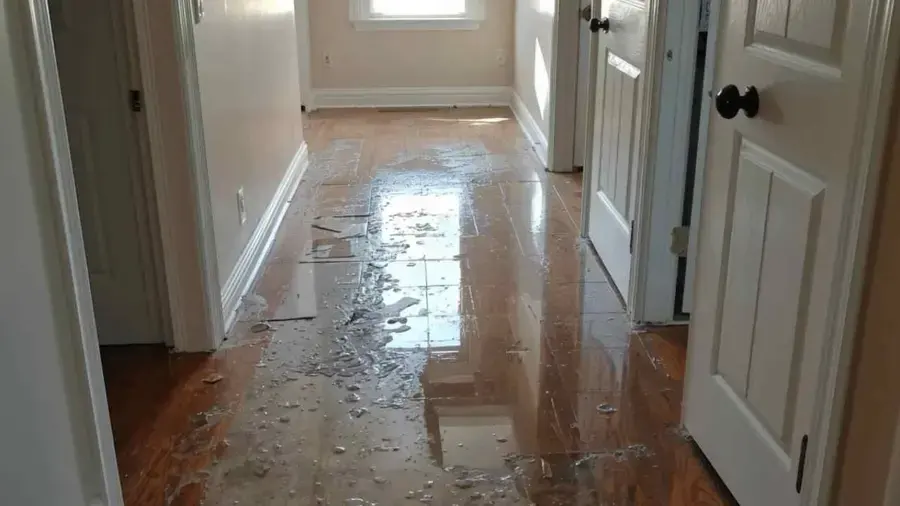
What to do first about slab leak water damage
Do only what feels safe. Water near an outlet, a sewage smell or a sagging ceiling means stepping back and calling first.
- 1
Test the meter
With every tap and appliance off, a spinning meter dial means water is escaping somewhere.
- 2
Close the main
If water is surfacing through the floor, shut the main valve to stop it.
- 3
Record the clues
Photograph hot spots, dark grout lines and swollen trim before anything is moved.
- 4
Line up both trades
Book leak detection and the drying at the same time so neither waits on the other.
What does slab leak water damage cost in New Port Richey, FL?
In New Port Richey, FL, drying out after a slab leak typically runs $1,400 to $7,500, not counting the plumbing repair, depending on how far the water spread under the floor, what flooring sits on the slab and how long the leak went unnoticed.
These are ranges seen on west Pasco jobs, not a price for your home. The water damage cost calculator narrows it; the moisture map on the walkthrough decides it.
How slab leak water damage is handled in New Port Richey
Find the wet zone
Meters and a thermal camera show how far the water moved under the floor covering.
Open the edges
Baseboards and the bottom of damp drywall come off so air can reach the slab edge.
Dry the concrete
Air movers and LGR dehumidifiers run, sometimes with added heat, until the concrete reads dry.
Work alongside the plumber
The spot repair or reroute and the drying are timed so neither holds up the other.
The four stops of a slab leak water damage dry-out
- 1
Trace and measure
A thermal camera and a pinless meter show the restoration team how far the water spread before a single fan is placed.
- 2
Pull the water out
Truck-mounted extraction empties the floors and the carpet pad first, because every gallon left behind adds drying days.
- 3
Move the air, pull the humidity
Air movers push moisture out of walls and floors, and LGR dehumidifiers take it out of the damp coastal air.
- 4
Read it dry, then log it
Daily meter readings are compared with an unaffected room; the drying stops when the numbers are within 2 to 4 points.
Block homes on a slab are the standard build from downtown New Port Richey out to Elfers and Trinity, and their copper or polybutylene water lines often pass beneath or inside the concrete. Water chemistry, shifting soil and years of rubbing against concrete eventually wear a pinhole into a line. Because the leak is below the floor, the first clues are subtle.
How a slab leak shows itself
- A patch of tile that feels warm, which points to the hot water line
- Grout lines that stay dark after mopping, or tiles that crack or come loose
- Baseboards that swell and paint that bubbles low on a wall
- A water bill that climbs while household use stays the same
- A damp, musty smell in a closet with no obvious source
The plumbing fix and the water damage are separate jobs
A leak detection specialist or plumber pinpoints the failed line with listening equipment and thermal imaging, then either repairs it through a small opening in the slab or abandons it and runs a new line overhead. That stops new water. The water already in the concrete, the wall bases and any floating floor is what the mitigation team handles: it maps the wet zone, removes trim and damp drywall edges, lifts flooring that traps moisture and sets air movers and dehumidifiers to dry the concrete.
Concrete dries slowly
A slab soaks up water deep below its surface. A reading taken on top can look normal while the concrete underneath is still wet, so the drying team compares against the same floor in an unaffected room before shutting equipment off.
What happens to the floor
Tile that is still firmly stuck down usually stays in place while the slab dries through the joints and the open edges. Laminate, vinyl plank and carpet generally come up so the concrete can breathe. To check for a hidden leak yourself, the EPA WaterSense meter test takes a few minutes, and UF/IFAS Extension explains how moisture behaves in Florida houses. A line that bursts above the floor is covered on burst pipe cleanup.
Where slab leak water damage calls come from
The restoration team covers New Port Richey itself plus the 34652, 34653, 34654, 34655 and 34656 ZIP areas: downtown and Gulf Harbors, Elfers, Moon Lake, Trinity and Seven Springs, with Port Richey, Holiday and Hudson next door.
Every town, ZIP and neighborhood coveredRelated water damage services in New Port Richey
Slab Leak Water Damage questions, answered
Answers based on how these losses usually go in west Pasco homes; your own walkthrough settles the details.
Ask the New Port Richey team about slab leak water damageWill homeowners insurance pay for slab leak damage?
Policies differ. Many pay for the water damage the leak caused and sometimes for breaking into the slab to reach the pipe, while the pipe itself may not be included. Coverage depends on your policy, so it is worth checking with your own insurer.
Do I call a plumber or a restoration company first?
Both, and ideally at once. The plumber stops and fixes the leak; the restoration contractor who responds dries the concrete, walls and flooring the water reached.
Will all the tile have to be torn up?
Usually not. Tile that is still firmly set often stays while the slab dries through the grout and the opened edges. Cracked or loose tiles, and tiles over the repair spot, are replaced.
Why does a slab take so long to dry?
Concrete holds water deep inside, and it gives it up slowly. A slab that stayed wet for weeks can take noticeably longer than a fresh leak, which is why readings are taken daily.
Can a hidden slab leak lead to mold?
Yes. Weeks of damp baseboards and drywall in a warm house give mold a head start, which is why the area around the leak is opened and dried rather than just wiped.
What is a reroute and does it avoid drying?
A reroute abandons the leaking line and runs a new one through walls or the attic. It avoids breaking the slab, but the water already under the floor still has to be dried.
Slab Leak Water Damage in New Port Richey? Call now.
Wet drywall, cabinets and subfloor do not dry on their own in Pasco humidity. A call now puts extraction and drying on the schedule today.
(888) 621-2041Start drying the slab leak in New Port Richey