Mobile Home Water Damage in New Port Richey, FL
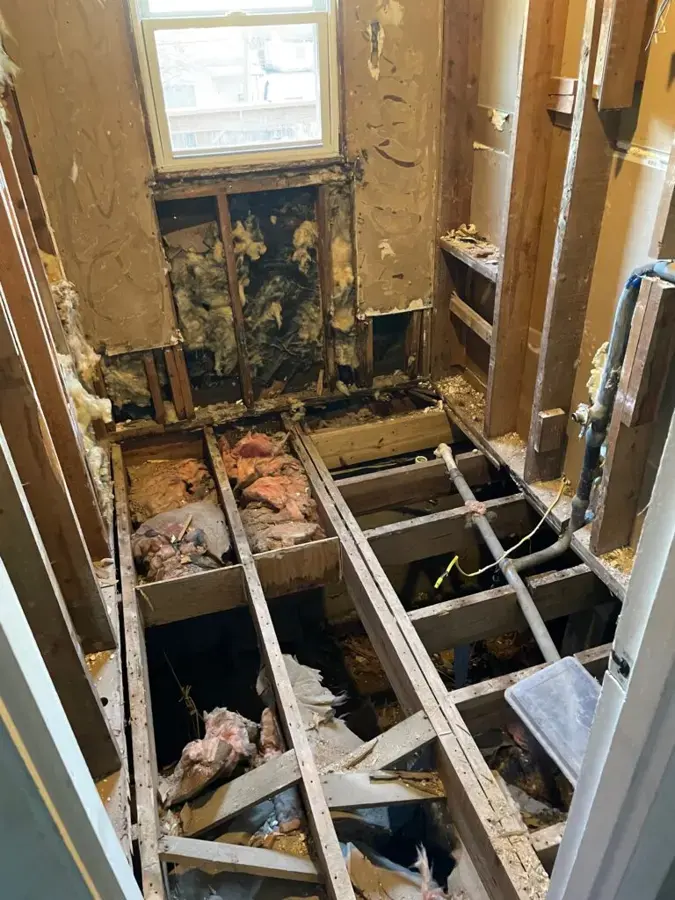
In a manufactured home, water rarely stays on top of the floor. It runs through seams and fixtures into the subfloor and collects in the belly wrap underneath, where nobody sees it. The restoration team checks both sides of the floor.
(888) 621-2041Get the manufactured home floor checked- 24/7 dispatch
- IICRC S500 drying goal
- Daily moisture readings
What to do first about mobile home water damage
Do only what feels safe. Water near an outlet, a sewage smell or a sagging ceiling means stepping back and calling first.
- 1
Shut the water off
Close the main at the meter or the valve where the line comes up under the home.
- 2
Switch off the heater
Turn off the water heater, often in a closet or an exterior compartment.
- 3
Look underneath
From outside, check for a sagging or dripping belly wrap under the leak.
- 4
Stay off soft spots
Keep off floor areas that feel soft or spongy until they are checked.
What does mobile home water damage cost in New Port Richey, FL?
In New Port Richey, FL, mobile home water damage typically runs $1,800 to $12,000 or more, depending on how much of the floor system got wet, whether the decking has to be replaced and how long the water sat in the belly.
These are ranges seen on west Pasco jobs, not a price for your home. The water damage cost calculator narrows it; the moisture map on the walkthrough decides it.
How mobile home water damage is handled in New Port Richey
Inspect underneath
The tech who does the walkthrough checks the belly wrap and piers, not just the floor.
Open the belly
Wet belly wrap is cut and soaked insulation removed so water can drain and dry.
Replace what swelled
Particleboard decking that swelled is cut out; framing is dried and treated.
Dry from both sides
Air and dehumidification work above and below the floor until readings are dry.
The four stops of a mobile home water damage dry-out
- 1
Trace and measure
A thermal camera and a pinless meter show the restoration team how far the water spread before a single fan is placed.
- 2
Pull the water out
Truck-mounted extraction empties the floors and the carpet pad first, because every gallon left behind adds drying days.
- 3
Move the air, pull the humidity
Air movers push moisture out of walls and floors, and LGR dehumidifiers take it out of the damp coastal air.
- 4
Read it dry, then log it
Daily meter readings are compared with an unaffected room; the drying stops when the numbers are within 2 to 4 points.
West Pasco has a large stock of manufactured and mobile homes, from parks near US 19 and Moon Lake to single lots across Elfers and Port Richey. Many were built in the 1970s, 1980s and 1990s, with polybutylene supply lines, water heaters in interior closets and floors framed in wood joists over a wrapped underbelly. That construction changes how a leak behaves.
Why manufactured-home leaks are different
Supply and drain lines run under the floor, inside the belly. When one leaks, the water soaks the insulation and pools on the belly wrap, which is a sheet of fabric or plastic stretched under the joists. From inside the home, the only sign may be a soft spot in the floor, a musty smell or a water bill that jumped. From outside, the belly may sag or drip.
- Belly wrap opened under the wet area and drained
- Soaked insulation removed and bagged
- Particleboard decking that swelled cut out and replaced
- Joists and the underside of the floor dried and treated
Particleboard versus plywood floors
Many older manufactured homes use particleboard floor decking. It swells and loses strength when it stays wet, and it does not return to shape once dried, so swollen sections are replaced. Plywood decking caught early can often be dried in place. Moisture readings and a look from underneath decide which is which.
Hurricane and flood water
If surge or floodwater reached the underside of a manufactured home, the belly insulation and ductwork are usually contaminated and removed. That water is Category 3. See storm surge flood cleanup.
Standards and next steps
Manufactured homes are built to a federal code overseen by the U.S. Department of Housing and Urban Development, and Ready.gov covers flood safety for all housing types. If the leak came from the water heater or a supply line, the water heater failure and burst pipe cleanup pages cover those sources.
Where mobile home water damage calls come from
The restoration team covers New Port Richey itself plus the 34652, 34653, 34654, 34655 and 34656 ZIP areas: downtown and Gulf Harbors, Elfers, Moon Lake, Trinity and Seven Springs, with Port Richey, Holiday and Hudson next door.
Every town, ZIP and neighborhood coveredRelated water damage services in New Port Richey
Mobile Home Water Damage questions, answered
Answers based on how these losses usually go in west Pasco homes; your own walkthrough settles the details.
Ask the New Port Richey team about mobile home water damageHow do I know if water is under my mobile home?
Look for a sagging or dripping belly wrap under the home, soft or spongy floor spots, a musty smell, or a water meter that moves with every fixture off.
Does the belly insulation have to be replaced?
Wet insulation holds water against the floor and joists, so soaked sections are removed so the floor system can dry. The belly wrap is patched or replaced afterward.
Can a particleboard floor be dried?
Particleboard that has swollen does not go back to its original shape or strength, so it is usually cut out and replaced. Plywood decking caught early often dries in place.
Is mobile home water damage covered by insurance?
Many manufactured-home policies cover sudden water damage, while long-term leaks and wear may not be. Coverage depends on your policy, so it is worth checking with your own insurer.
Why does the floor feel soft near the bathroom?
A slow leak at a toilet, tub or supply line can soak the decking for months. The soft feel means the decking has already lost strength and should be checked from below.
How long does drying take?
Once wet insulation and swollen decking are out, the framing often dries in three to five days with air movers and a dehumidifier working above and below the floor.
Mobile Home Water Damage in New Port Richey? Call now.
Wet drywall, cabinets and subfloor do not dry on their own in Pasco humidity. A call now puts extraction and drying on the schedule today.
(888) 621-2041Dry out the mobile home before the floor fails